Hot Tub Water Chemistry: The Beginner’s Guide
Learn the core hot tub water chemistry readings every spa owner should understand, including sanitizer, pH, alkalinity, calcium hardness, and water balance.
The five readings that matter most
Hot tubs are small, warm bodies of water. That means bather waste, sanitizer demand, pH drift, and scale risk can change faster than they would in a swimming pool. A simple weekly routine starts with five readings: sanitizer, pH, total alkalinity, calcium hardness, and water temperature.
| Reading | Why it matters | Common target |
|---|---|---|
| Free chlorine | Kills bacteria and oxidizes contaminants. | Often 3–5 ppm for spas |
| pH | Affects comfort, sanitizer strength, corrosion, and scale. | Usually 7.2–7.8 |
| Total alkalinity | Buffers pH so it does not swing too quickly. | Often 80–120 ppm |
| Calcium hardness | Protects acrylic, heaters, plumbing, and surfaces from aggressive or scaling water. | Often 150–250 ppm |
| Temperature | Warm water increases sanitizer demand and evaporation. | Owner preference, within spa limits |
Test before adding chemicals
Guessing is where most spa problems start. Test strips are quick, but a liquid test kit can be more consistent for pH, alkalinity, and sanitizer. Test before you add chemicals, then circulate and retest after the product has had time to mix.
Make one adjustment at a time
Do not chase every number at once. Start with total alkalinity if it is far out of range, then pH, then sanitizer. Calcium hardness, salt, borates, and stabilizer are usually slower-moving adjustments.
Never mix chemicals together outside the spa water. Add products separately, with circulation running, according to label directions.
Recommended spa supplies
As an Amazon Associate, Spa Chemical Calculator earns from qualifying purchases.
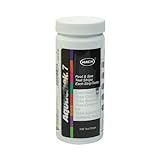
Quick sanitizer, pH, alkalinity, and hardness checks keep small-volume spa water from drifting.
View on Amazon
Raises calcium hardness when fill water is too soft and foam or corrosion risk increases.
View on Amazon
Raises total alkalinity so pH is less jumpy after soaking and chemical additions.
View on Amazon